
Choosing a hair transplant method can feel like picking a “side” in a debate—especially when you keep seeing headlines like FUE vs DHI and claims that one is always better than the other. In reality, both techniques can produce natural, dense results when they’re performed on the right candidate by an experienced medical team. The “best” option depends less on the name of the method and more on your hair loss pattern, donor capacity, lifestyle, styling goals, and how the clinic designs and executes the plan.
If you’re trying to decide between the two, it helps to understand what actually changes between them: how grafts are harvested, how they’re placed, the level of control over angle and density, recovery expectations, and which hair types or situations each approach tends to serve best. This guide breaks down FUE vs DHI in a practical, patient-focused way so you can ask better questions and make a smarter decision.
FUE vs DHI: Which Is Better?
At a high level, FUE (Follicular Unit Extraction) and DHI (Direct Hair Implantation) are not fully separate “competitors” in the way they’re often marketed. Most people don’t realize that DHI is essentially a graft-implantation method that commonly uses FUE harvesting. In many clinics, the donor extraction step looks similar for both: follicular units are taken one by one from the donor area. The major difference usually shows up in how the grafts are implanted.
- FUE generally describes the extraction method (individual graft removal) and can be paired with different implantation approaches (slits/incisions made first, then grafts inserted).
- DHI usually refers to implantation with a specialized pen (often called an implanter pen), allowing the team to place grafts directly without pre-making all recipient sites in the same way.
So when people ask “FUE or DHI—which is better?” the most accurate answer is: it depends on your priorities and your clinic’s skill, because many clinics perform both using the same extraction technique but different placement tools and workflows.
Below, we’ll compare them in the ways that matter most for real-world outcomes.
1) What FUE and DHI Actually Mean (And How Each Procedure Works)
How FUE typically works
In a standard FUE workflow, the medical team:
- Shaves or trims the donor area (often the back and sides of the scalp).
- Uses micro-punch tools to extract follicular units individually.
- Prepares grafts under magnification (sorting by number of hairs per graft).
- Creates recipient sites (tiny channels/slits) in the transplant area.
- Places grafts into the prepared sites with forceps or an implanter device.
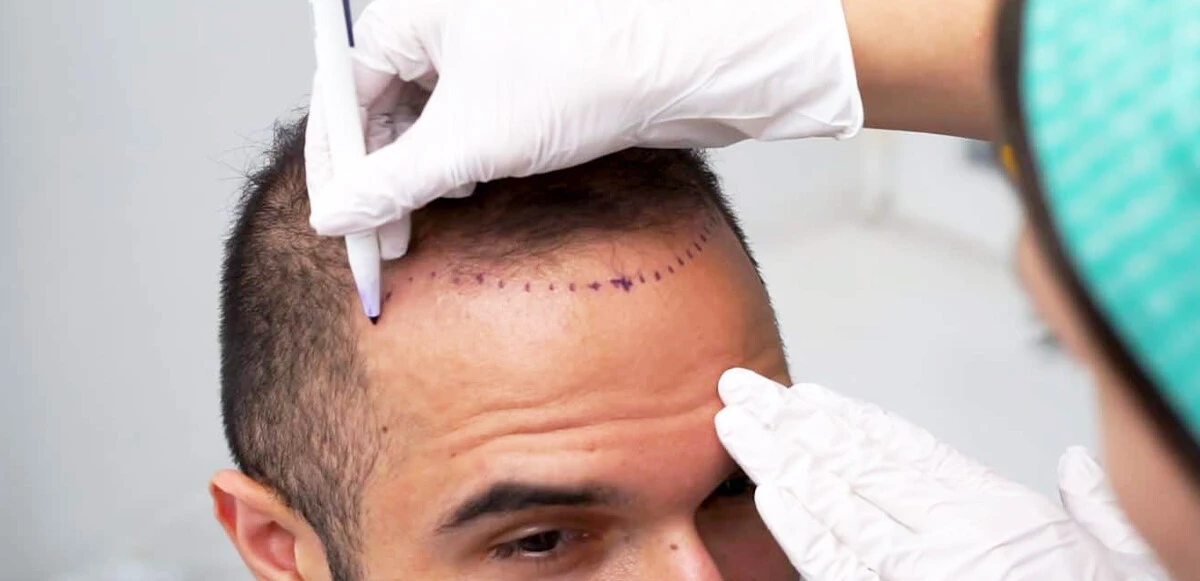
This “site creation first, placement second” approach can be extremely precise when done by an experienced surgeon, because recipient sites can be designed carefully for direction, angle, and spacing before grafts are inserted.
How DHI typically works
With DHI, the workflow is often:
- Extract grafts using an FUE-like technique.
- Load grafts into an implanter pen.
- Implant grafts directly with the pen, which creates the site and places the graft in one motion.
The key promise of DHI is more direct implantation control with potentially less time that grafts spend outside the body (depending on the clinic’s workflow). It can also reduce the need to pre-create all recipient channels with blades in the same way.
The practical takeaway
The difference is less about “good vs bad” and more about:
- Implantation tool and method
- How the recipient area is prepared
- The team’s experience with the chosen workflow
- How well the plan matches your hair characteristics and goals
In many cases, a top-tier clinic can deliver excellent outcomes with either method.
2) Naturalness, Density, and Hairline Design: Which One Has the Edge?
This is where most patients focus—and understandably so. But naturalness is driven by planning and execution, not the label.
Hairline naturalness
A natural hairline requires:
- Proper angulation (especially in the frontal zone)
- Randomized distribution (not “pluggy” rows)
- Correct graft selection (single-hair grafts at the very front)
- Realistic density planning (hairlines should be age-appropriate)
Both FUE and DHI can achieve highly natural hairlines. DHI is often marketed as “more natural,” but that’s not inherently true. The biggest driver is whether the surgeon designs the hairline thoughtfully and whether the team places grafts in correct direction and pattern.
Density
Density depends on:
- How many grafts can be safely harvested
- How dense the recipient area can be implanted without risking graft survival
- Hair caliber, curl pattern, and color contrast (these can make hair look denser even with fewer grafts)
DHI can be helpful for dense packing in smaller areas, especially when the team is highly skilled with the pen. However, dense packing is possible with classic FUE implantation too, and some clinics prefer pre-made sites because it can allow a very controlled and uniform distribution.
Good to know
If a clinic promises “maximum density” without discussing your donor limitations, scalp laxity, hair caliber, or long-term hair loss progression, treat that as a red flag. The best method is the one that balances density with long-term planning.
3) Recovery, Scabbing, and Downtime: What to Expect
Recovery experiences vary by person, but there are a few general patterns clinics often observe.
Recipient-area healing
- FUE with pre-made sites often results in visible scabbing in the recipient area that gradually resolves over 7–14 days with proper washing.
- DHI may produce slightly different scab patterns because the implantation process is different, but scabbing is still common.
Swelling and redness
Swelling (especially in the forehead) can happen with both approaches. Redness in the recipient area may last longer in fair-skinned patients regardless of method.
Return to routine
Most patients return to desk work within a few days, but workouts, swimming, sauna/steam rooms, and sun exposure should follow your clinic’s timeline. The “best” choice isn’t necessarily the one with the shortest downtime—it’s the one that your clinic can perform with the least trauma and the highest graft survival.
The truth about “faster recovery”
You’ll see claims that DHI always heals faster or causes less trauma. That can be true in some hands and some scenarios, but it isn’t guaranteed. A gentle, well-executed FUE plan can be just as comfortable and predictable.
4) Who Is a Better Candidate for FUE vs DHI?
Here’s the most useful way to think about it: the right method is the one that matches your case.
DHI may be a strong option if you:
- Want high control in a smaller target area (e.g., hairline refinement)
- Need careful placement between existing hairs (some clinics use DHI to minimize shaving in the recipient area, depending on the plan)
- Have a priority on precise angulation in complex zones (like frontal transitions)
FUE (with pre-made sites) may be a strong option if you:
- Need a larger session covering more surface area
- Want the surgeon to design recipient sites comprehensively before placement
- Have a case where speed, staging, and graft handling are critical for efficiency in big sessions
Special scenarios
- Diffuse thinning: Some patients with diffuse loss need extra caution to avoid shock loss of existing hairs. The technique matters, but so do medication planning, density strategy, and surgeon judgment.
- Curly or wavy hair: Extraction and placement require skill to prevent transection and maintain curl pattern direction. This is less about FUE vs DHI and more about the team’s expertise.
- Beard-to-scalp grafts: Often performed with FUE extraction; implantation approach can vary.
- Female hair transplant: Often requires tailored shaving strategy and careful placement around existing hair—method selection is highly case-specific.
In other words: choose the team, then choose the method that team recommends for your anatomy and goals—provided they can justify it clearly.
5) Key Questions to Ask Any Clinic (This Matters More Than the Method)
If you want the best odds of a strong result, your consultation questions are more important than the marketing labels. Ask:
Who performs each step?
Is the surgeon designing the hairline and creating recipient sites? Who extracts the grafts? Who implants them?
How do you protect graft survival?
Ask about graft handling time, storage solutions, hydration, temperature control, and how they minimize trauma.
What is my donor capacity and long-term plan?
A good clinic explains how many grafts you can safely use now and what they’ll preserve for future hair loss.
What density is realistic for me?
Look for an honest explanation tied to hair caliber, color contrast, scalp characteristics, and donor supply.
Can I see results on patients like me?
Not just perfect cases—ask for examples similar in hair type, hairline goals, and Norwood pattern.
What is the plan for shock loss and ongoing hair loss?
A transplant doesn’t stop genetic loss. Ask about maintenance strategies if appropriate.
These questions reveal competence and transparency—two things that matter more than whether the plan is called FUE or DHI.
So…FUE or DHI: A Practical Verdict
If you’re searching for a simple winner in FUE vs DHI, the honest answer is that neither is universally “better.” They are tools, and outcomes depend heavily on:
- The surgeon’s design skill (hairline planning, direction, distribution)
- The team’s technical execution (extraction quality, graft handling, implantation precision)
- Your donor characteristics and hair caliber
- The size of the session and the complexity of the recipient area
- A realistic long-term strategy for progressive hair loss
DHI can be an excellent choice for patients prioritizing high-precision implantation in a focused area and for clinics with deep experience using implanter pens. FUE with pre-made sites can be ideal for large coverage cases, where structured site creation and efficient implantation help manage graft volume while preserving survival.
The best next step is to get a consultation that includes a donor assessment, a density plan, and a clear explanation of why one implantation approach suits your case. When a clinic can explain trade-offs clearly—without exaggeration—that’s usually a stronger signal of quality than any single technique name.