On this page
- What a hair transplant actually involves
- Who carries out the procedure
- Hair transplant cost: UK compared with Turkey
- What a package price should include
- How to check a clinic before you book
- Travelling from the UK: how the trip usually works
- Recovery and the timeline for results
- Aftercare once you are back in the UK
- Is a hair transplant permanent?
- Who is a suitable candidate?
- Frequently asked questions
- Talk to us
If you live in the UK and you are weighing up a hair transplant in Turkey, you are really weighing up three things: what the procedure involves, what it should cost, and how you get looked after once you are home again. This guide covers all three plainly, without the hype that surrounds this subject.
What a hair transplant actually involves
A hair transplant moves healthy follicles from a donor area, usually the back and sides of the scalp, to areas where hair has thinned or receded. The donor hair is taken from a region that is typically less affected by the hormonal process behind male pattern hair loss, which is why transplanted hair often continues to grow where the original hair did not.
Two techniques dominate. FUE (follicular unit excision) extracts follicles individually and places them into small incisions in the recipient area. DHI uses an implanter pen to create the incision and place the follicle in one motion, which can suit dense packing and smaller areas. Neither is universally better. The right choice depends on your donor supply, the area being treated, and the surgeon’s own judgement.
A transplant redistributes the hair you already have. It does not create new hair, and it does not stop ongoing hair loss elsewhere on the scalp. Any clinic that tells you otherwise is overselling.
Who carries out the procedure
Procedures arranged through us are carried out by Dr. Enis Emre Yılmaz. Ask us which parts of the procedure the doctor performs personally and which are carried out by trained technicians. It is a reasonable question and you should get a straight answer before you book, from us or from anyone else.
Hair transplant cost: UK compared with Turkey
UK prices vary enormously for the same procedure. Research by the Wimpole Clinic, which sent identical photographs and requirements to UK clinics, found the average cost of a 1,500-graft procedure to be around £4,820, with quotes for that same procedure ranging from £1,995 to £15,000 and an average cost per graft of roughly £3.25. Other UK clinics commonly quote full FUE sessions in the £3,000 to £10,000 range depending on graft count and surgeon.
Turkish clinics generally quote lower, and the gap is largely structural rather than a reflection of quality: staffing costs, premises and overheads differ between the two markets. That said, a low headline price is not in itself a reason to book. The meaningful question is what the price includes and who is performing the surgery.
We quote per case rather than publishing a single figure, because the number of grafts you need, the technique, and the area being treated all change the total. Ask us for a written quote and you will get an itemised one.
What a package price should include
Before you compare two quotes, check that they cover the same things. A complete package would normally set out:
- The consultation and scalp assessment, and who carries it out
- Pre-operative blood tests
- The procedure itself, with the graft count stated in writing
- Medication and post-operative care products
- Accommodation and airport and clinic transfers, where offered
- The first wash and post-operative check
- Follow-up arrangements after you return home
If a quote is a single number with no breakdown, ask for one before you pay a deposit.
How to check a clinic before you book
This is the part most worth your time. Reasonable checks include:
- Who performs the surgery. Ask for the surgeon’s name and qualifications, and ask specifically which parts of the procedure the surgeon performs and which are carried out by technicians.
- Where it is performed. Ask for the name of the hospital or licensed facility.
- Graft count in writing. The number quoted should appear on your paperwork, not just in a chat message.
- Unedited results. Ask to see results at comparable timepoints, photographed under similar lighting, from patients with similar hair type and loss pattern to yours.
- What happens if something goes wrong. Ask what the clinic’s policy is on revision work and who you contact once you are back in the UK.
Be wary of pressure to decide quickly, quotes that change sharply after a deposit, and any reluctance to name the operating surgeon.
Travelling from the UK: how the trip usually works
Most patients plan a trip of around three to four days. A typical sequence is:
- Before you travel: a remote assessment from photographs, a plan and a written quote, then booking.
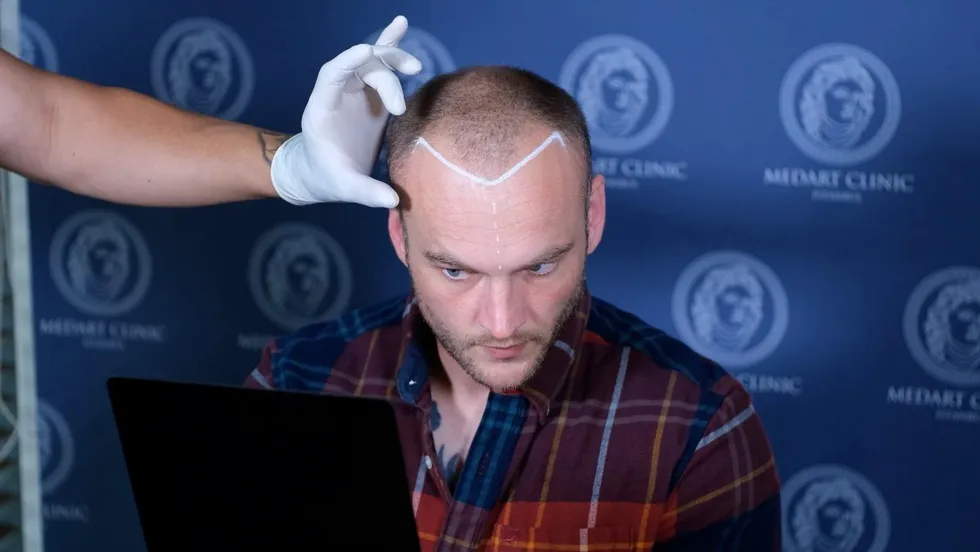
- Day one: arrival, in-person consultation, hairline design agreed with you, blood tests.
- Day two: the procedure, usually under local anaesthetic, typically lasting six to eight hours depending on graft count.
- Day three: post-operative check, first wash demonstration, aftercare instructions and medication.
- Return home: flying is generally fine at this stage, though you should follow the specific advice you are given.
Plan your time off realistically. Many people take about a week away from work, partly for recovery and partly because the recipient area is visibly red and scabbed in the first days.
Recovery and the timeline for results
Expect some swelling and redness in the first few days, and small scabs around the transplanted follicles that typically clear within roughly one to two weeks. Transplanted hairs commonly shed in the weeks after surgery. This is an expected part of the process, not a sign of failure.
New growth usually begins around three to four months, with meaningful density by six to nine months. Final results are generally assessed at around twelve months, and sometimes a little later for dense or larger cases. Anyone promising a finished result in three months is not describing how this works.
Aftercare once you are back in the UK
Aftercare is where travelling abroad can genuinely fall short, so it is worth settling before you book. Make sure you know who to contact with a question at week two or month four, how you send progress photographs, and what the arrangement is if you need to be seen in person.
If you develop signs of infection such as spreading redness, increasing pain, fever or discharge, contact a doctor in the UK promptly as well as informing the clinic. Do not wait for a reply from abroad before seeking care.
Is a hair transplant permanent?
Follicles taken from the donor area are generally less susceptible to the hormonal process that causes male pattern hair loss, and transplanted hair commonly continues to grow long term. However, hair loss in the untreated areas of your scalp can continue, which is why some patients need a second procedure later or use medical treatment to help maintain the hair they still have. A good consultation should discuss your likely future pattern of loss, not just the area being treated now.
Who is a suitable candidate?
Suitability depends mainly on donor density and the stability of your hair loss. Transplants are generally more predictable once the pattern of loss has settled, which is one reason surgeons are often cautious with much younger patients. Certain medical conditions, medications and some causes of hair loss can affect suitability or outcome, so give an accurate medical history at assessment.
Frequently asked questions
Is the procedure painful?
It is performed under local anaesthetic. The injections themselves are usually the uncomfortable part; most patients describe the procedure afterwards as tolerable rather than painful. Some soreness in the donor area for a few days is normal.
How many grafts will I need?
It depends on the area being covered, the density you want and your donor supply. The figure should come from an assessment of your scalp and photographs, not from a price list.
Can women have a hair transplant?
Yes, though the pattern of hair loss in women is often different and the causes are more varied, so assessment matters even more. See our page on hair transplants for women.
When can I fly home?
Most patients fly home the day after their post-operative check. Follow the specific advice from the team who treated you.
When can I go back to the gym?
Light activity usually resumes within a week or so, with strenuous exercise, swimming and saunas left longer. You will be given specific timings as part of your aftercare instructions.
Talk to us
If you would like an assessment and a written, itemised quote, send us photographs of your hairline, crown and donor area and we will come back to you with a plan. Book a free consultation and we will tell you plainly if we think a transplant is not the right option for you at this stage.
Want an honest assessment?
Send photographs of your hairline, crown and donor area. We will tell you what we think is achievable, and say so if a transplant is not the right option for you.
Book a free consultation