
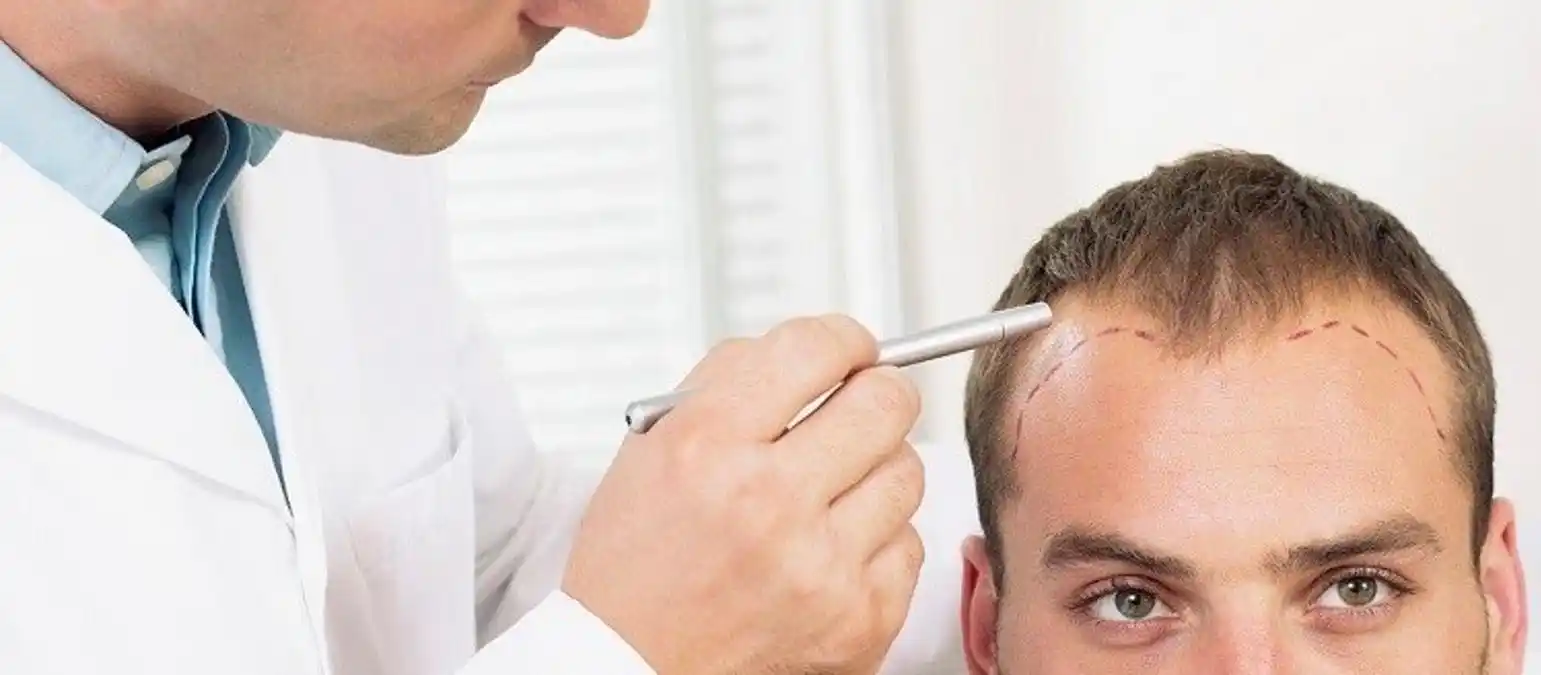
A hair transplant can feel like a big leap—not just medically, but emotionally. Most people aren’t only asking, “Will it grow?” They’re asking a deeper question: Will it look like me? If you’ve ever seen an unnatural, “pluggy” hairline online, it’s completely normal to worry about whether your result will be obvious or artificial.
The good news is that modern techniques have advanced dramatically. When a procedure is planned and executed well, a hair transplant can look extremely natural, even at close range. But naturalness is not automatic. It depends on the clinic’s design choices, the surgeon’s skill, your hair characteristics, and how the grafts are placed—especially at the hairline. This guide explains what makes a transplant look real, what causes unnatural outcomes, and how to set yourself up for a result that blends seamlessly.
Do Hair Transplants Look Natural? What Makes Results Seamless and Undetectable
Yes—a hair transplant can look natural when it’s performed with modern methods and a thoughtful plan. The most natural results share one thing: they mimic how hair grows in real life. That means the hairline is not too straight, the angle and direction are consistent with your natural growth pattern, and the density is realistic for your age and hair type.
But there’s a catch: naturalness is not guaranteed just because the clinic uses “FUE” or “DHI.” Those terms describe tools and workflows. Natural results come from design and execution, including:
- A hairline created with micro-irregularities (not a ruler-straight line)
- Correct use of single-hair grafts at the front edge
- Proper angle and direction that match your facial anatomy and existing hair
- A density plan that balances fullness with long-term donor supply
- A strategy that suits your ongoing hair loss pattern—not just today’s look
Think of it like tailoring a suit: the fabric matters, but the fit and craftsmanship matter more. A great team can make a transplant look like you were never losing hair—just aging naturally.
1) What Makes a Hair Transplant Look Natural?
Natural appearance is built from multiple small decisions that add up. Here are the biggest factors that separate a “wow, it looks real” outcome from a “something seems off” result.
Hairline design (the make-or-break detail)
The human hairline is not perfectly straight. It has soft irregularities and natural asymmetry. A natural transplant hairline usually includes:
Micro- and macro-irregularities:
Tiny, subtle variations in the outline that keep it from looking stamped on.
Age-appropriate positioning:
A teenage-low hairline on a mature face can look unnatural even if the grafts survive perfectly. A good plan respects your age, facial proportions, and the likely future progression of hair loss.
A soft transition zone:
The very front should be feathered and light, gradually building density behind it. This is often called a “natural gradient.”
Correct graft selection and placement
Grafts can contain 1, 2, 3, or sometimes 4 hairs. Naturalness depends on placing the right graft type in the right zone:
- Single-hair grafts: should dominate the very front edge of the hairline
- Double-hair grafts: commonly used just behind the hairline for density
- Triple/quad grafts: often reserved for mid-scalp to boost fullness
If multi-hair grafts are placed at the leading edge, the hairline can look harsh and artificial. This is one of the most common reasons people spot a transplant.
Angle and direction (how hair “lays”)
Hair doesn’t grow straight up everywhere. It exits the scalp at angles that change by zone:
- The frontal hairline typically grows forward and slightly upward
- The temples have flatter, more lateral direction
- The crown forms a swirl pattern that must be respected
When graft angles are too upright or inconsistent, hair can look “spiky,” difficult to style, and unnatural in bright light. Skilled implantation is what makes hair settle naturally.
Density planning (realistic is better than extreme)
A dense hairline can look great—but only if it’s built correctly and matches the rest of the scalp. Over-dense packing at the very front with poor transition can create an unnatural wall of hair. Also, donor hair is limited. A natural plan balances:
- Current cosmetic goals
- Donor supply preservation
- Future hair loss progression
- The need for potential second sessions
A natural-looking transplant isn’t always the densest possible transplant. It’s the most believable one.
2) Why Some Hair Transplants Look Unnatural (And How to Avoid That)
Unnatural outcomes often come from predictable mistakes. Knowing these helps you choose the right clinic and ask the right questions.
A hairline that is too straight or too low
This is the classic “transplant look.” It often happens when hairlines are designed like a simple curve rather than a natural, irregular contour. A low, sharp hairline can also look cosmetically “off” as you age.
Incorrect graft distribution
If multi-hair grafts are placed in front, or if grafts are placed in visible rows, the result can look artificial. Row placement may happen when a team prioritizes speed over artistry.
Wrong angles and poor temple work
Temples are one of the hardest areas to do naturally because hair direction is complex and the angles are very acute. Overbuilding temples or placing grafts too upright can create an obvious “done” look. A natural plan usually treats temples conservatively.
Overharvesting the donor area
A donor area that looks patchy, thinned out, or moth-eaten can also make the transplant obvious, even if the hairline looks fine. Proper donor management is part of a natural result.
Poor long-term planning
Sometimes the transplanted hair looks okay at first, but the surrounding native hair continues to thin. Without a long-term strategy, the transplant can become visually isolated—making it look unnatural over time.
Avoiding these issues comes down to two things: choosing a clinic that prioritizes design and donor planning, and following aftercare to protect graft survival and healing quality.
3) What Technique Looks More Natural: FUE, DHI, or FUT?
People often assume that one method automatically looks more natural. In practice, all major methods can produce natural results.
FUE
FUE extracts grafts individually from the donor area. It is widely used because it can leave minimal linear scarring and offers flexible harvesting. Naturalness depends on how the hairline is designed and how grafts are placed—not the extraction tool itself.
DHI
DHI typically uses an implanter pen to place grafts, sometimes allowing very controlled implantation. In experienced hands, DHI can support excellent angulation control. But it is not a magic guarantee. A poorly designed hairline will still look unnatural, even with a pen.
FUT
FUT removes a strip from the donor area and then separates grafts under magnification. It can yield high-quality grafts and is still used in many advanced practices. It leaves a linear scar, but it can also deliver very natural results on the scalp.
The honest answer: the most natural technique is the one your clinic performs best for your case, combined with elite hairline design and graft placement skill. Technique is a tool—naturalness is craftsmanship.
4) Timeline: When Will It Look Natural?
Even a perfect transplant goes through phases that can look “not natural” temporarily. Knowing the timeline prevents unnecessary panic.
First 2 weeks: healing and visible signs
Redness, scabbing, and a “freshly done” look are normal. This phase is not what the final outcome resembles.
Weeks 2–8: shedding phase
Many transplanted hairs shed. Some people also experience temporary shedding of native hairs. During this stage, it can look thinner than before, which feels discouraging but is often expected.
Months 3–6: early regrowth
New hairs appear. They may start fine, lighter, or slightly wiry. Styling may still be limited.
Months 6–12: major cosmetic improvement
Density builds and texture becomes more natural. Many people feel the transplant begins to look “real” to others in this window.
Months 12–18: maturation
For some patients—especially with crown work—full maturity can take longer. Hair thickens, blends better, and becomes easier to style naturally.
A key point: naturalness isn’t only “does it look real?” It’s also “does it blend?” Blending improves as density builds and the hair starts behaving like your existing hair.
5) How to Choose a Clinic for the Most Natural Look
If your goal is “no one can tell,” you need a clinic that thinks like an artist and plans like an engineer. Here’s what matters most.
Look for proof, not promises
Ask for clear, consistent before-and-after examples of patients with:
- Similar hair caliber (fine vs thick)
- Similar hair color contrast (dark hair/light skin vs low contrast)
- Similar hair loss pattern and hairline goals
- Similar temple and frontal zone complexity
Photos should include close-ups of the hairline and different lighting, not only flattering angles.
Ask who does what
Naturalness often depends on who designs the hairline and who places grafts. Ask directly:
- Who designs the hairline?
- Who creates recipient sites (if applicable)?
- Who implants grafts?
- How much of the work is delegated?
A clinic that is transparent about roles is usually more trustworthy than one that avoids specifics.
Discuss donor strategy and long-term planning
A natural result today can become unnatural later if future hair loss isn’t planned for. A strong clinic will talk about:
- Your donor capacity
- A realistic graft budget
- Future loss patterns
- Whether you may need another session later
- How to avoid creating an “island” of transplanted hair
Make sure the hairline plan fits your face
The best hairlines match your facial proportions and age. Ask your clinic to explain:
- Why they chose that height and shape
- How they will create irregularity and softness
- How they will treat temples (conservative vs aggressive)
If a clinic offers the same hairline to everyone, the results will often look “samey,” which is the opposite of natural.
Aftercare matters more than most people think
Even the best surgery can look less natural if healing is poor. Following washing instructions, avoiding friction, controlling sun exposure early, and attending follow-up checks all support clean healing and better blending.
Final Thoughts: Can It Look Like You Were Never Balding?
Yes. With a well-designed plan and skilled execution, a hair transplant can look so natural that even people close to you won’t recognize it as a transplant—they’ll just think you look refreshed. But the goal shouldn’t be “perfect hair.” The goal should be believable hair: a hairline that fits your face, a density that makes sense, and a look that will still make sense years from now.
If you want the most natural result possible, focus on:
- Hairline design (irregular, age-appropriate, soft transition)
- Correct graft selection (single-hair in the front)
- Proper angulation and direction
- Donor management and long-term planning
- A clinic that can show consistent, close-up results