
Hair loss can affect confidence in a very personal way, which is why many people research one key question before committing to a procedure: Is a hair transplant a permanent solution? With so much information online—some overly optimistic, some unnecessarily scary—it helps to understand what “permanent” actually means in real life and what determines how long your results will last.
Is a Hair Transplant a Permanent Solution?
In most suitable candidates, a hair transplant is considered a long-lasting, often permanent solution because the surgeon relocates follicles from the donor area (typically the back or sides of the scalp) that are genetically more resistant to pattern hair loss. Once these follicles successfully take root in the recipient area, they usually continue producing hair for many years, and often for decades, following the normal hair growth cycle.
However, “permanent” doesn’t mean your hair will never change again. A hair transplant does not stop ongoing hair loss in your native (non-transplanted) hair, so you may continue to thin in areas that weren’t transplanted. That’s why long-term planning matters: a well-designed transplant anticipates future loss patterns so the overall look stays natural as you age.
Finally, the longevity of results depends heavily on candidate selection, surgical technique, and aftercare. When grafts are harvested and implanted properly—and the donor area is strong—the transplanted follicles are likely to remain stable. In some cases, additional treatments or a second session may be recommended later, not because the transplanted hair “fails,” but to keep density balanced if hair loss progresses elsewhere.
How Hair Transplants Create Long-Lasting Growth
A hair transplant works on a concept often described as “donor dominance.” In most candidates, hair at the back and sides of the scalp (the donor area) is less sensitive to the hormone-related processes that drive common pattern hair loss. During a hair transplant, a surgeon harvests follicles—usually via an FUE hair transplant (Follicular Unit Extraction) or sometimes FUT (strip method)—and implants them into thinning or bald areas to rebuild the hairline, reinforce the mid-scalp, or add density to the crown.
Once these follicles are relocated, they typically retain their original genetic “resistance.” That’s why a well-planned hair transplant can be so durable: you’re not “creating” new hair, you’re moving hair that is predisposed to keep growing. After the procedure, it’s normal for transplanted hairs to shed in the early weeks (often called shock shedding). The follicles themselves usually remain healthy under the skin and re-enter a new growth cycle in the months that follow. Over time, those follicles produce new shafts again and again—much like they did in the donor area.
This is also why the quality of the surgical technique matters so much. Follicles are living structures. They can be damaged by poor extraction, dehydration, overly aggressive handling, incorrect implantation depth, or excessive trauma to the scalp. When graft survival is high, a hair transplant is far more likely to behave like a long-term solution rather than a temporary cosmetic boost.
What “Permanent” Really Means in Real Life
In practical terms, a hair transplant is permanent in the sense that transplanted follicles are intended to last for many years—often indefinitely—because they are moved from a stable donor zone. However, permanence has boundaries. Your scalp will continue to age, your hormones can shift, and most importantly, your native (non-transplanted) hair can continue to thin even after a successful hair transplant.
This leads to a common misconception: people think the hair transplant “stops hair loss.” It doesn’t. A hair transplant treats the visible pattern by strategically adding hair where it’s needed, but it doesn’t change the underlying tendency for androgenetic alopecia (pattern hair loss) to progress. That progression is why long-term planning matters: a hair transplant that looks perfect at 12 months can look less balanced at year three or five if surrounding native hair continues to miniaturize.
So, is a hair transplant permanent? For transplanted follicles in a properly selected patient, very often yes. For your overall head of hair without any future thinning, not necessarily. The most truthful way to say it is: a hair transplant can be a permanent foundation, but you may need a long-term strategy to protect the hair you still have.
Key Factors That Determine Longevity
The durability of a hair transplant depends on biology, planning, and execution. The same procedure can look dramatically different long-term depending on who performs it, how it’s designed, and how your hair loss pattern evolves.
Here are signs you’re more likely to get stable, lasting hair transplant results:
- You have a strong, dense donor area with hair that appears resistant to thinning
- Your hair loss pattern is relatively established (or predictable based on family history and current progression)
- You have realistic expectations about density, coverage, and the limitations of graft supply
- Your scalp and skin health are good, without uncontrolled inflammatory scalp conditions
- Your surgeon designs a conservative, age-appropriate hairline that will still look natural years from now
- You’re open to maintenance (if advised) to slow ongoing thinning in native hair
Beyond candidacy, a few specific elements are especially important:
1) Donor supply and graft management
Your donor hair is not unlimited. If a hair transplant uses too many grafts too early, or harvests too aggressively, it can thin the donor region and reduce options later. A skilled surgeon treats donor supply like a long-term budget—spending it wisely so the result stays natural over time.
2) Hair loss progression
If you’re early in your hair loss journey, your pattern can expand significantly. That doesn’t mean you can’t have a hair transplant, but it does mean design choices must anticipate future recession and crown thinning. The best hair transplant plans for the “next you,” not just the current photos.
3) Technique and graft survival
FUE hair transplant and DHI hair transplant techniques can both produce excellent outcomes when performed correctly. The key is graft handling, proper angulation, minimal trauma, and meticulous implantation. High survival rates translate into more stable density and fewer “patchy” areas long-term.
4) Scalp conditions and lifestyle factors
Chronic inflammation, uncontrolled dandruff/seborrheic dermatitis, psoriasis, or scarring alopecia can reduce the predictability of hair transplant results. Smoking, poor nutrition, and inconsistent aftercare can also impair healing and graft success.
Aftercare and Maintenance for Lasting Results
Even though the transplanted follicles may be resistant to hair loss, the early healing window is still critical. The first two weeks after a hair transplant are largely about protecting grafts physically, keeping the scalp clean as instructed, and allowing the micro-wounds to close properly. After that, the focus shifts to patience and consistency—because growth takes time and the cosmetic transformation is gradual.
Most people see an “ugly duckling” phase after their hair transplant, where shedding occurs and the scalp may look similar to pre-op or even slightly thinner for a short period. This is usually temporary. New growth often becomes noticeable in the following months, thickens over time, and matures in texture and direction. Final results are typically judged around the one-year mark, although the crown can sometimes take longer to fully develop.
For long-term permanence, maintenance is less about “saving” transplanted hair and more about protecting native hair that wasn’t transplanted. Many patients benefit from a broader hair loss plan—this could include physician-guided therapies that reduce miniaturization, improve scalp environment, and stabilize future thinning. If ongoing hair loss is ignored, a hair transplant can remain successful while still requiring refinement later to maintain overall balance.
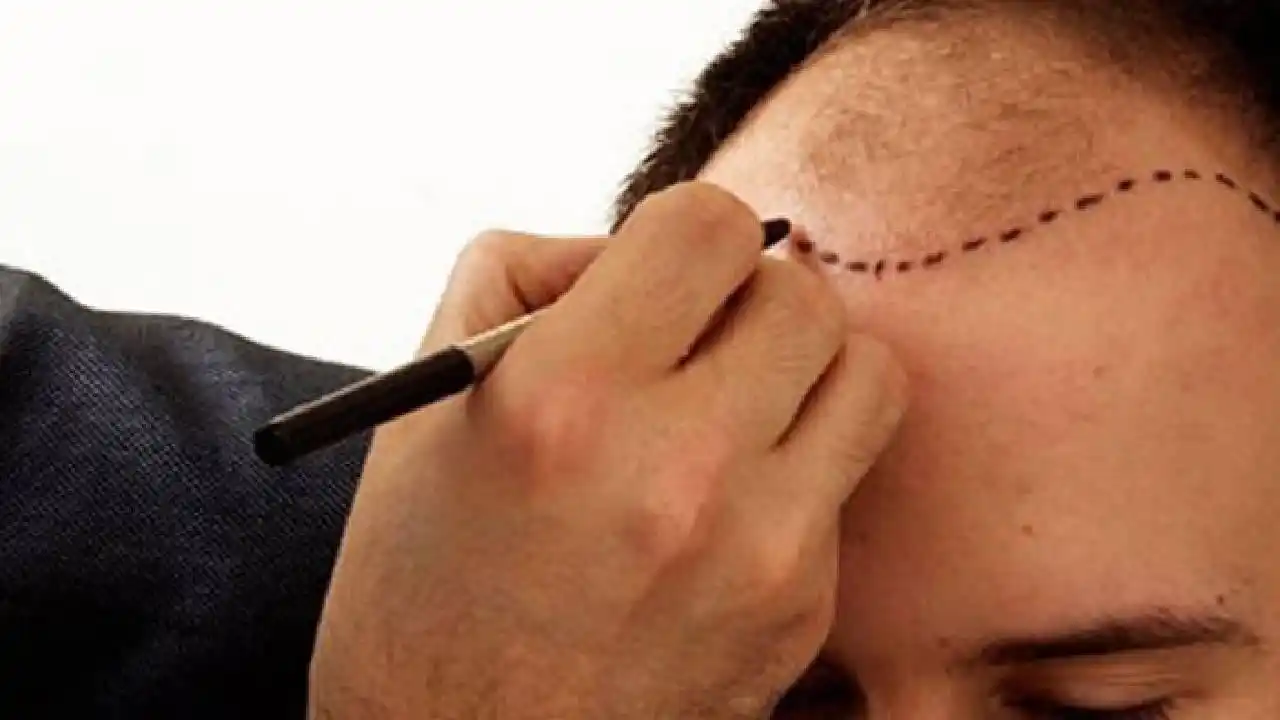
A high-quality hair transplant should also be built on conservative design principles. Hairlines that are too low, too straight, or too dense in the front without planning for the mid-scalp and crown can create unnatural contrasts later. A natural-looking hair transplant often prioritizes a realistic hairline, soft transitions, and distribution that still makes sense if you thin further behind it.
When a Hair Transplant May Not Be Enough
A hair transplant is powerful, but it’s not magic—and it’s not always the first or only step. If your hair loss is very advanced, your donor area is weak, or you have diffuse thinning across the entire scalp, a hair transplant may not provide the density you’re imagining. In these cases, the idea of “permanent solution” needs to be reframed: you may achieve improvement and better framing of the face, but not the same thickness you had as a teenager.
There are also scenarios where hair loss is driven by temporary or medical causes (such as certain hormonal issues, nutritional deficiencies, high stress shedding, or specific scalp diseases). In those situations, treating the underlying cause can be more important than surgery. A hair transplant placed into an unstable situation can lead to disappointment—not because transplanted follicles can’t last, but because the overall canvas keeps changing.
Finally, it’s worth remembering that a hair transplant result can remain permanent while still evolving aesthetically. As you age, your facial proportions change, your hairstyle preferences shift, and your hair characteristics (like curl pattern, thickness, and color) can change too. The most satisfying long-term outcomes come from a hair transplant that looks appropriate not just today, but across decades—because it respects both biology and time.